TL;DR — Key takeaways
- Contemporary outfits mix modern cuts with Indian or global details — jewellery should bridge the two, not pick a side.
- One focal piece per look: statement earrings or a layered necklace or a bold cuff.
- Match jewellery scale to outfit volume: structured outfits take cleaner jewellery; flowing outfits take longer lines.
- Keep metals consistent across jewellery, bag hardware, and shoes.
- This is the Cluster 2 pillar: every everyday and workwear styling guide on this blog links back here.
Table of Contents
- How to Style Contemporary Outfits — The Short Answer
- What Counts as a Contemporary Outfit?
- The 4 Rules That Work for Every Contemporary Look
- Contemporary Outfit Types and Their Jewellery
- Necklines, Sleeves and Silhouettes
- The Shaadi-Season Test: Standing Out Without Overdoing It
- Day-to-Night Contemporary Styling
- Building a Contemporary Jewellery Capsule
- FAQ
- Conclusion + CTA
How to Style Contemporary Outfits — The Short Answer
To style contemporary outfits, treat jewellery as the bridge between modern and traditional elements. Choose one focal piece, match its scale to the outfit’s volume, keep metals consistent, and let the outfit’s strongest detail — a drape, a cut, a print — lead. Contemporary styling works when the jewellery looks deliberate, not added as an afterthought.
Contemporary outfits are the hardest to style precisely because they are so flexible. A fusion top with palazzos, a draped jumpsuit, a modern co-ord set, or a contemporary dress with Indian embroidery — each one sits between categories. This guide gives you a system that works across all of them.
What Counts as a Contemporary Outfit?
Contemporary outfits blend modern silhouettes with Indian, global, or fusion details. Common examples:
- Indo-western tops with palazzos, cigarette pants, or denim
- Draped or asymmetric dresses, jumpsuits, and co-ord sets
- Modern kurtas with western trousers or skirts
- Fusion lehengas, dhoti pants, and cape-style tops
- Minimal dresses with Indian embroidery, mirror work, or block prints
- Structured blazers worn over ethnic or fusion separates
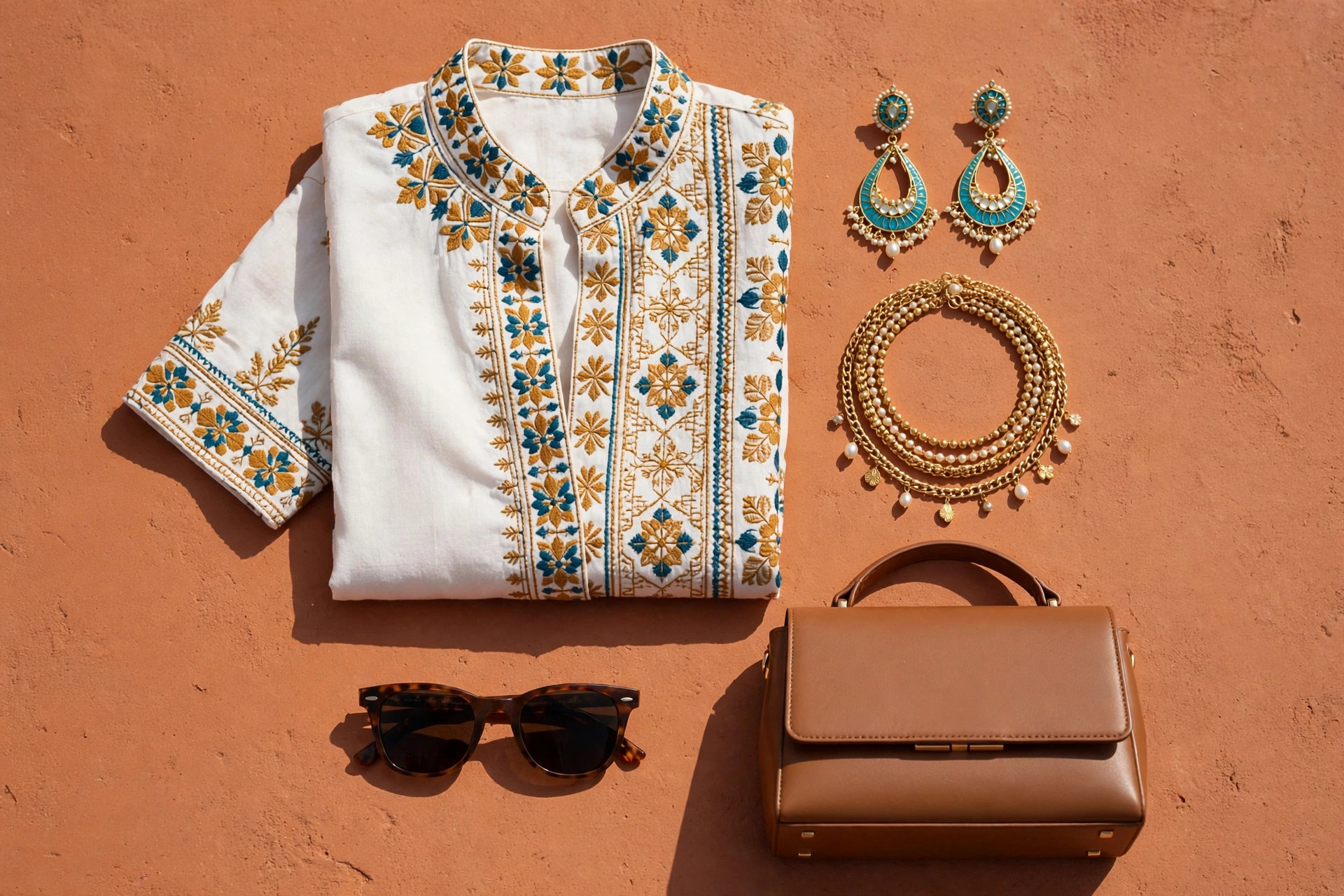
The styling challenge is the same in every case: the outfit already mixes two languages. Jewellery must translate between them. A pair of traditional jhumkas with a fully western jumpsuit can look confused; a pair of sleek modern drops with a heavily embroidered fusion lehenga can look underdressed. The sweet spot is jewellery that nods to both worlds — modern shapes with Indian textures, or traditional motifs in clean, contemporary settings.
The 4 Rules That Work for Every Contemporary Look
Rule 1: One focal piece
Earrings or necklace or cuff. Never all three at full volume. Contemporary outfits already have a lot going on — a strong drape, an asymmetric hem, a bold print. One focal piece keeps the look intentional.
Rule 2: Match scale to volume
- Structured, fitted outfits (blazers, cigarette pants, fitted co-ords) → clean, geometric, smaller-scale jewellery.
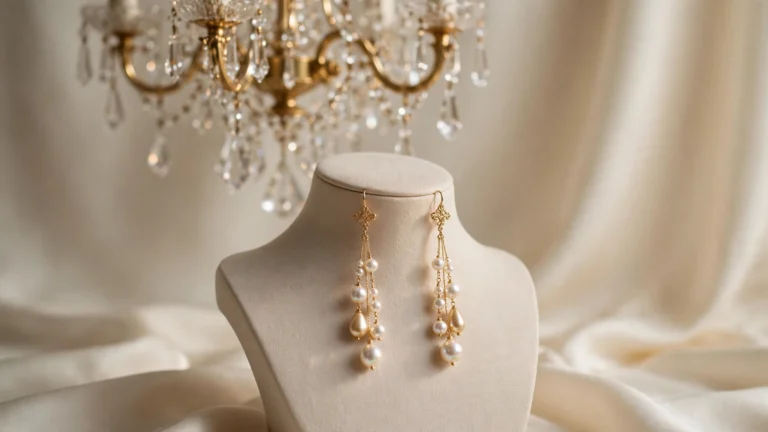
- Flowing, voluminous outfits (draped dresses, palazzos, capes) → longer earrings, layered necklaces, pieces with movement.
- Minimal outfits → jewellery can be bolder, because there is visual room for it.
- Embellished outfits → jewellery goes quiet. The embroidery is the statement.
Rule 3: Keep metals consistent
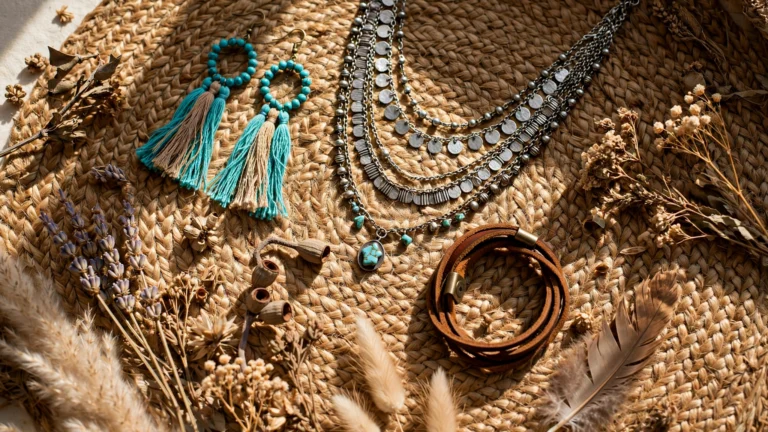
Gold-tone jewellery with gold bag hardware and gold-toned shoes. Silver with silver. Oxidised silver with earthy, boho-leaning outfits. Mixed metals can work, but they need to look deliberate — a repeated two-tone motif, not an accident across three accessories.
Rule 4: Finish the edges
Hair, bag, and shoes are part of the jewellery story. A neat hairstyle shows earrings properly. Neutral hairpins in tones that go with everything keep flyaways tidy without adding a second accessory story. A structured bag and clean shoes ground a fusion look that could otherwise drift into costume.
Contemporary Outfit Types and Their Jewellery
| Outfit | Jewellery that works | Keep quiet |
|---|---|---|
| Indo-western top + palazzos | Medium drops or jhumka-style earrings, one cuff | Long layered necklaces (compete with the top’s print) |
| Draped jumpsuit | Statement earrings, one ring | Necklaces (drape is the neckline) |
| Co-ord set | Layered fine necklaces, small hoops | Heavy traditional pieces |
| Modern kurta + trousers | Pendant + studs, or jhumkas alone | Statement necklace + statement earrings together |
| Fusion lehenga / cape top | Chandelier earrings, maang-tikka-style hairpin (occasion only) | Chunky layered necklaces over embroidery |
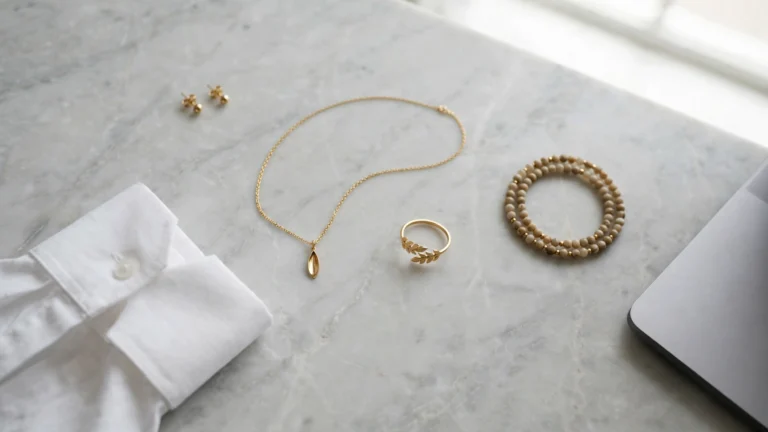
| Blazer + ethnic separates | Studs, fine pendant, slim ring | Dangling earrings under a structured collar |
| Contemporary dress (minimal) | Bold earrings, layered necklace, cuff — pick one lead | Nothing — this is the outfit to experiment with |
For everyday contemporary looks, the earrings and necklace collections cover the full range from minimal studs to statement drops.
Necklines, Sleeves and Silhouettes
Necklines
- High / crew / mandarin collar: skip the necklace; let earrings lead.
- V-neck / plunging: pendant that follows the V.
- Sweetheart / strapless: choker or statement earrings.
- Halter / asymmetric: no necklace; earrings and one ring.
- Shirt collar: fine pendant above the top button.
Sleeves
- Sleeveless / short sleeves: bracelets and cuffs are visible and worth styling.
- Full sleeves: skip bracelets; they snag and hide. Put the interest at the ears.
- Bell / cape sleeves: keep wrist jewellery off entirely — fabric movement plus bracelets equals tangles.
Silhouettes
- A-line / flared: medium earrings balance the volume below.
- Fitted / bodycon: clean, geometric jewellery echoes the structure.
- Layered / draped: longer lines — drop earrings, one long pendant — echo the drape.
The Shaadi-Season Test: Standing Out Without Overdoing It
Wedding season is where contemporary styling gets its hardest test. Everyone is dressed up, and the temptation is to add more — more sparkle, more pieces, more everything.
The better approach is contrast. When most guests wear heavily embellished traditional outfits, a clean contemporary silhouette with one exceptional piece of jewellery stands out more than another fully loaded look. A draped contemporary dress with one pair of chandelier earrings. A fusion lehenga with a single statement cuff and quiet ears. A modern co-ord with a layered necklace as the only jewellery story.
Standing out is not about volume. It is about one clear decision, executed well. If someone can describe your look in one sentence — “the one with the long tassel earrings” — you have styled it right.
Day-to-Night Contemporary Styling
Contemporary outfits are often worn from daytime events into the evening. The one-swap rule keeps this easy:
- Day: studs + fine pendant + slim bracelet.
- Evening: swap studs for statement drops, or add a layered necklace over the pendant, or swap the bracelet for a cuff.
- Change nothing else. The outfit, bag, and shoes stay the same.
Carry the swap piece in a small pouch. Two minutes in the car or the washroom, and the look moves from day to night without a full change.
Building a Contemporary Jewellery Capsule
A capsule that covers most contemporary outfits:
- Everyday studs — gold-tone or pearl.
- Medium drop earrings — the workhorse for fusion and Indo-western looks.
- Statement earrings — one pair for weddings and evenings.
- Fine pendant necklace — short chain, small pendant.
- Layered necklace set — two or three fine chains for minimal outfits.
- One cuff — clean shape, medium width.
- One ring — slim, smooth, wearable daily.
- Neutral hairpins — for finishing hair without adding a second story.
Eight pieces, dozens of combinations. If you find yourself reaching for the same three pieces every time, those three are your real capsule — build around them. For a no-decision option, a curated monthly subscription box delivers a handpicked set matched to your taste, and you can browse the full shop to fill specific gaps.
FAQ
How to style contemporary outfits with jewellery?
Pick one focal piece, match jewellery scale to the outfit’s volume, keep metals consistent, and let the outfit’s strongest detail lead. Earrings usually carry contemporary looks; necklaces support them.
What jewellery goes with Indo-western outfits?
Medium drops or jhumka-style earrings with one cuff work for most Indo-western looks. Keep necklaces quiet unless the neckline is plain and unembellished.
Can I wear jhumkas with western outfits?
Yes, if the jhumkas are small and the outfit is otherwise simple. Small jhumkas with a plain dress or co-ord set look fusion-intentional. Large bridal jhumkas with a fully western outfit usually clash.
How do I style a contemporary outfit for a wedding?
Choose a clean contemporary silhouette and one exceptional jewellery piece — chandelier earrings, a statement cuff, or a layered necklace. Skip the rest. Contrast beats volume in a crowded wedding look.
What is the difference between contemporary and traditional styling?
Traditional styling follows established pairings (jhumkas with lehengas, chokers with sarees). Contemporary styling mixes modern and traditional elements and uses jewellery to bridge them, with more freedom — and more need for restraint.
How many jewellery pieces should I wear with a fusion outfit?
Three at most: one focal piece plus two quiet ones. For example, statement earrings + one ring + a slim bracelet. Or layered necklace + studs + one ring.
Conclusion + CTA
Contemporary outfits reward restraint. One focal piece, scale matched to volume, consistent metals, finished edges — that is the whole system, and it works from a weekday brunch to wedding season. Build the eight-piece capsule, use the one-swap rule for day-to-night, and let the outfit’s strongest detail lead.
Explore the full styling library in the Cluster 2 section of the blog — office wear, maxi dresses, boho looks, blue dresses, and first-date outfits — then browse the shop to build your capsule.
Images: `images/hero.webp` (NEW 2027 hero). Reused originals: `images/styling-contemporary-outfits-1.jpg` through `images/styling-contemporary-outfits-7.webp` (original 2019 post images — outfit flat lays and earring close-ups; shown for reference, not as current product listings).
—